After you have switched to editing a course step, you have opened the step settings, the "Common settings" tab.
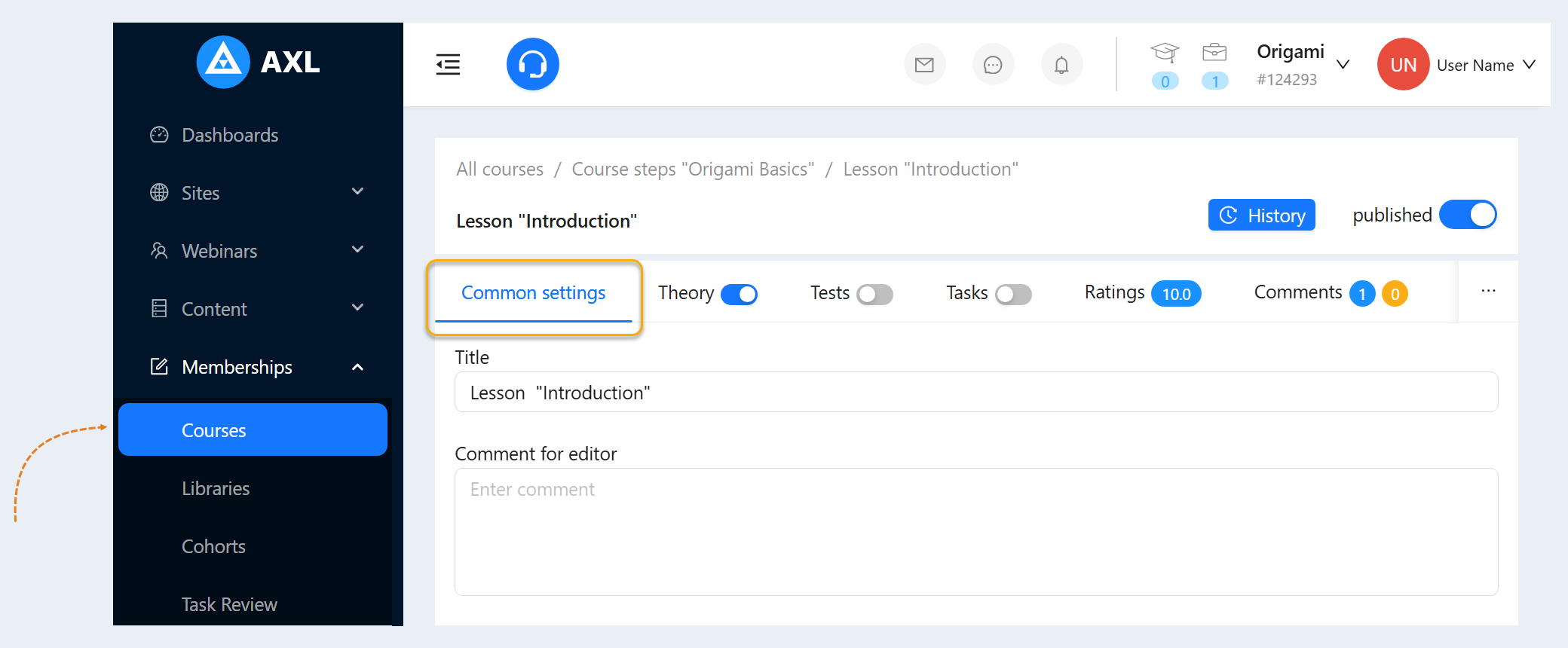
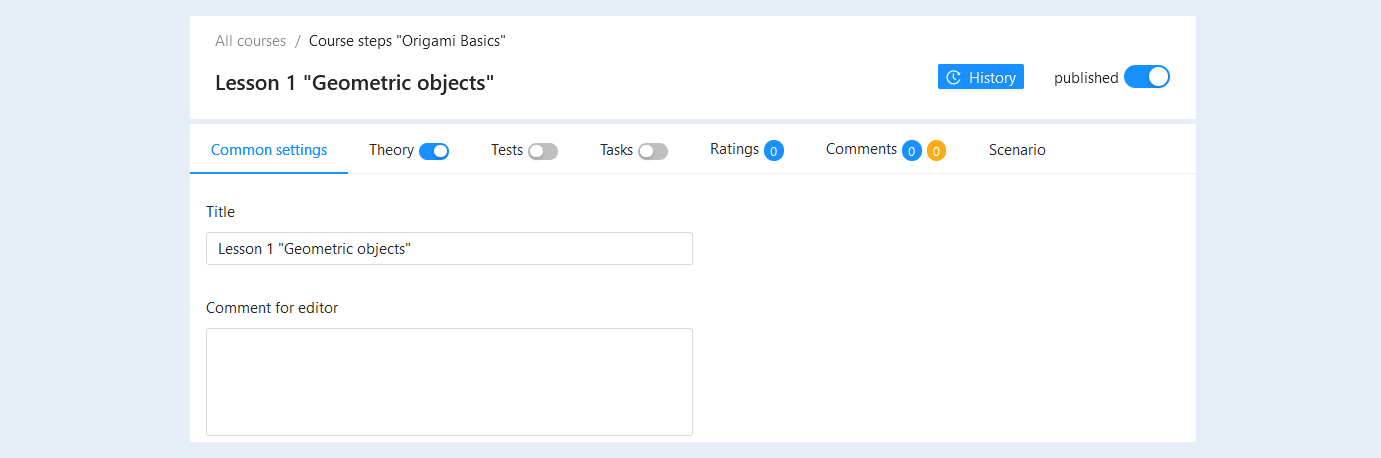
Here you can change the name of a step and write a comment for the curator for this step. Users will not see your comment.
Here are the settings:
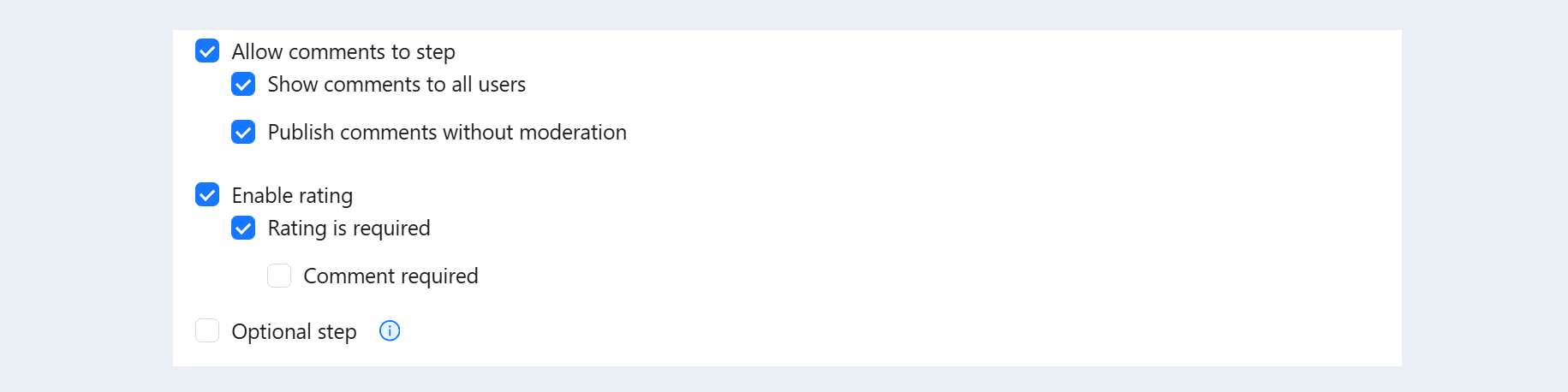
Allow comments to step. This option enables users to leave comments on a specific step or lesson. When this setting is enabled, users can ask questions, share opinions, or provide feedback on the material. This fosters interaction between users and the instructor and enhances the learning process through the exchange of opinions and questions.
- Show comments to all users. When this option is enabled, all users will be able to see comments left by other learners. If the option is disabled, only the author of the comment and the instructor can see them. This setting allows for open discussion and information sharing among users. Users can see what their peers think, which may help them with their questions and improve their understanding of the material.
Publish comments without moderation. Enabling this feature allows users to leave comments without prior approval from the instructor or moderator. The comments will be immediately visible to everyone. This streamlines the communication process and reduces waiting time for responses. However, it requires a certain level of trust in users, as unmoderated comments may include incorrect or inappropriate content.
- Show comments to all users. When this option is enabled, all users will be able to see comments left by other learners. If the option is disabled, only the author of the comment and the instructor can see them. This setting allows for open discussion and information sharing among users. Users can see what their peers think, which may help them with their questions and improve their understanding of the material.
Enable ratings. Check this box to activate the rating system for the given step or lesson. This allows users to rate the lesson content on a scale of 1 to 10. This provides an opportunity for learners to express their opinions on the quality, accessibility, and usefulness of the material. Additionally, this feature allows instructors to collect feedback about their performance for the further improvement of the course. Enabling this option may help identify the strengths and weaknesses of the lesson.
- Rating is required. This option means that users must leave their rating before they can continue their learning or move on to the next step of the course. Without a rating, the next step will be inaccessible to the user. This may encourage users to pay more attention to the material, as they will be required to think about how they perceived it. At the same time, this can increase the volume of collected feedback and improve the quality of the course.
Comment required. When this option is activated, users will need to leave an explanatory comment for their rating, explaining why they gave that particular rating. This helps gather more detailed and constructive feedback, allowing instructors to understand the reasons for user satisfaction or dissatisfaction. Such explanations can be used to implement changes and adjustments in the lecture or the course as a whole.
- Rating is required. This option means that users must leave their rating before they can continue their learning or move on to the next step of the course. Without a rating, the next step will be inaccessible to the user. This may encourage users to pay more attention to the material, as they will be required to think about how they perceived it. At the same time, this can increase the volume of collected feedback and improve the quality of the course.
Check "Optional step" if you want to make this step optional for users. If you check this box, users can skip this step without completing it.
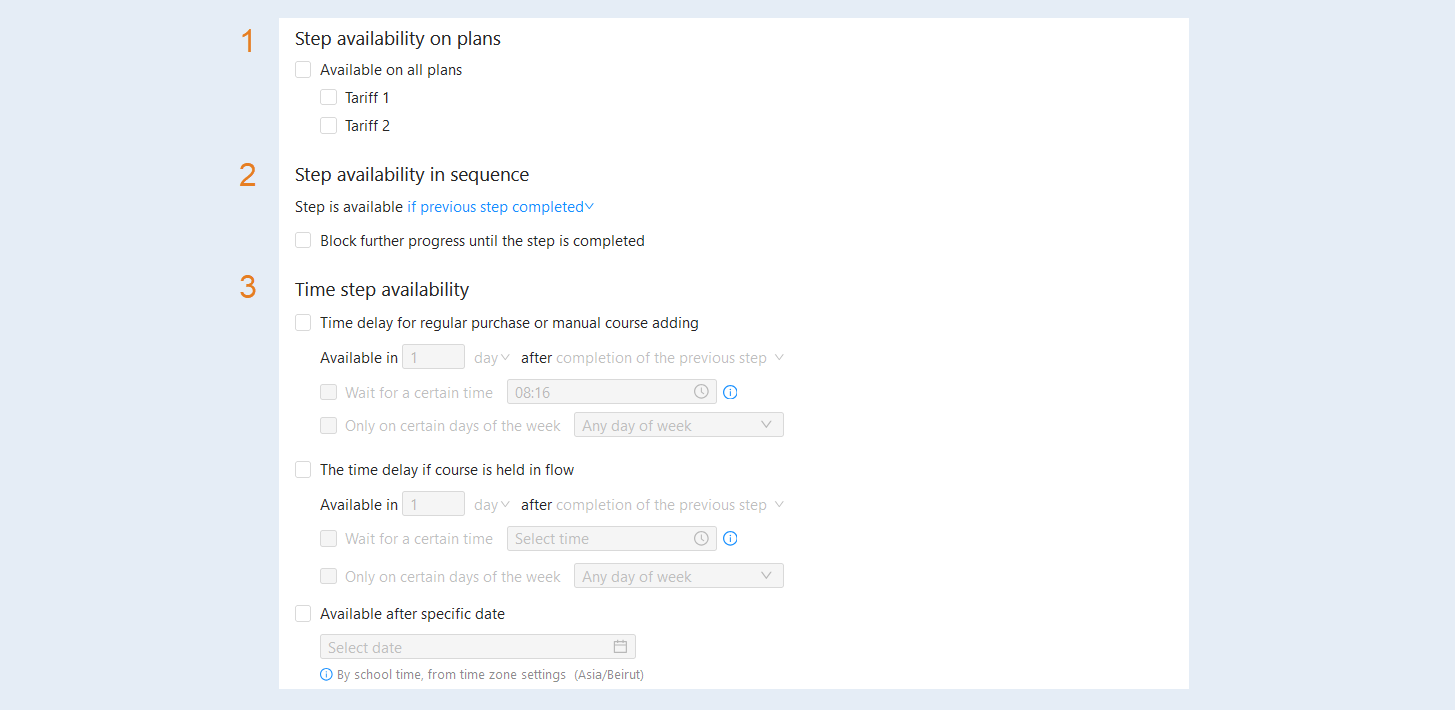
Below are the settings for the availability of this step during the course of users.
You can define access conditions by the following parameters:
Step availability on plans. You can restrict the availability of a specific lesson depending on the chosen plan. For example, if you have multiple pricing plans (basic, standard, premium), you can specify which lessons or modules will be available for each plan. Select a plan from the list provided.
Step availability in sequence. Define the order in which the course steps will be available. Choose from the list the condition:
The step is available if the previous step is completed. This option requires the current step to be finished before accessing the next one. It ensures a sequential learning process and helps users not to miss important topics.
The step is available if all previous steps are completed. This option enforces stricter progress control since access to the step will only be granted after all previous steps are completed. This is particularly useful for courses with a complex structure, where mastering each part is important before proceeding to the next.
The step is available regardless of previous steps. This option allows users to freely choose which steps they want to take, without the need to follow a fixed order. This can be beneficial for courses where users have different levels of preparation or interests.
Block further progress until the step is completed. This option protects the user’s experience by preventing them from moving on to the next step until they complete the current one. It helps focus on important information and ensures that the user does not miss crucial aspects of the material.
Time step availability. Set a time delay. For example, you may specify a delay of 1 day, allowing the user to complete no more than one step per day. After 24 hours, the next step of the course will become available to them. Check the appropriate box:
Time delay for regular purchase or manual course adding. Check the box to activate the time delay. Then specify when the step will become available to the user: enter the number of hours, days, weeks, or months for the delay. And indicate the condition: the step will become available after completing the previous step, after starting the course, after granting access, after starting the previous section, or after completing the previous section.
- Wait for a certain time. This option allows you to set the exact time when the lesson will become available to users. For example, you can set that the lesson will be available only after 10:00 AM. This can be useful for launching new topics or modules so that all users start studying the material at the same time. It is set according to membership portal time from the timezone settings.
Only on certain days of the week. This option allows access to the lesson only on certain days of the week. For instance, you can specify the lesson’s availability only on Mondays and Wednesdays. This is convenient for courses where classes are held on specific days or for creating a schedule for users.
- Wait for a certain time. This option allows you to set the exact time when the lesson will become available to users. For example, you can set that the lesson will be available only after 10:00 AM. This can be useful for launching new topics or modules so that all users start studying the material at the same time. It is set according to membership portal time from the timezone settings.
The time delay if course is held in flow. Check the box to activate the delay. Then specify the time interval when the step will become available to the user: enter the number of hours, days, weeks, or months for the delay. And indicate the condition: the step will become available after completing the previous step, after starting the cohort, after starting the course, after starting the previous section, or after completing the previous section.
Wait for a certain time. This option allows you to set the exact time when the lesson becomes available.
Only on certain days of the week. This option allows you to open access to the lesson only on certain days of the week.
Available after a specific date. Check the box to activate the delay. Then select the date and time in the calendar when the access to the course step will be opened.
For more information on step availability, see the "Course Availability" article.